
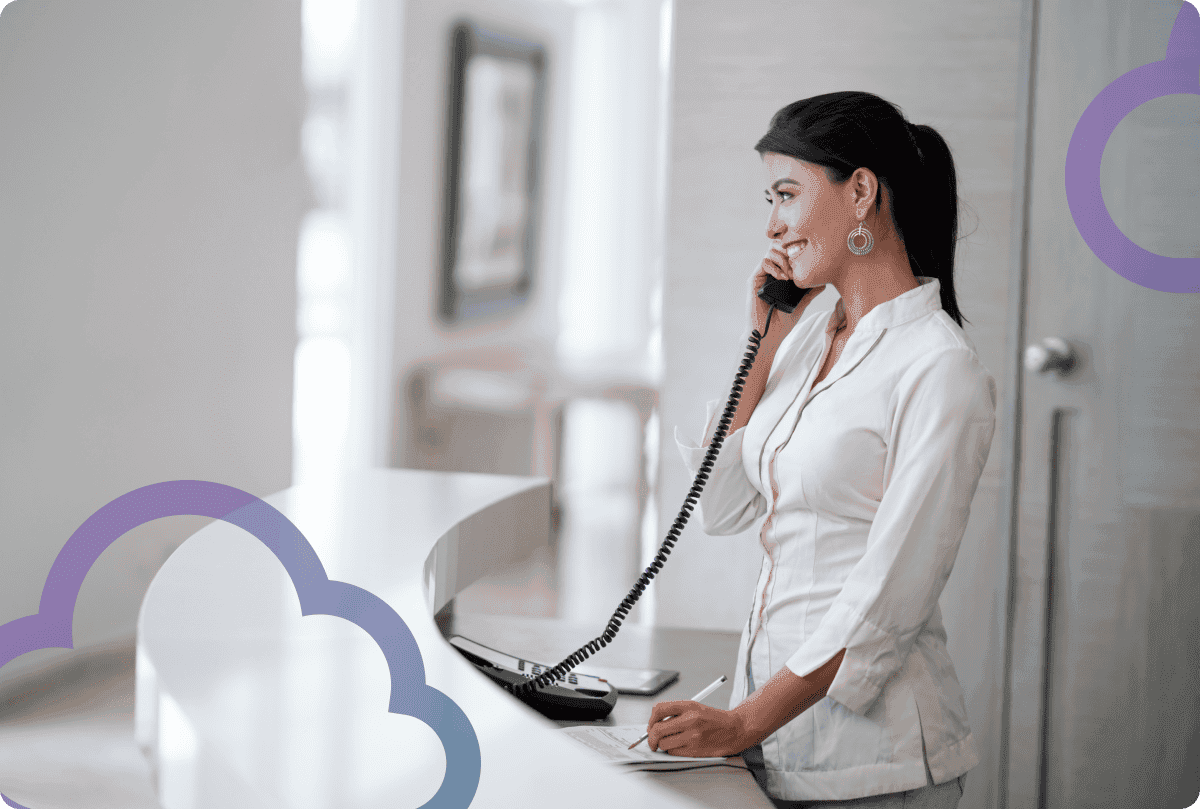
If you have worked in hospitality for a long time, you know the guest experience depends on the quality of your team’s communication. A warm welcome is only the beginning; behind the scenes, dozens of quick interactions keep each day running smoothly. Housekeeping updates room turnover status. The kitchen checks dietary requirements. Maintenance is dispatched before the guest notices a leak. And yes, the front desk answers when a call comes in from 212 to request a late checkout.
However, many hotels still rely on systems that cannot keep pace. Phones that drop calls. Messaging tools that do not integrate. Hardware that does not support your hybrid staff or scale across properties.
Learn more aboutUnified Communications in Hospitality
This guide is designed for hoteliers, GMs, and IT managers who know it is time to address the situation. We will show you the best hotel phone systems available in 2026, what to look for, what to avoid, and why making the right choice (literally) can save time, improve service, and reduce support costs.
Reasons Your Current Phone System Needs an Upgrade
Hotel phone systems have not always kept pace with the rest of the technology stack. Many properties still operate legacy systems that cost too much and do too little. Here are the main warning signs:
- High costs: Older phone systems often involve high maintenance fees and costly analog lines. Every outage takes a serious toll on your budget.
- Limited scalability: As your hotel grows or adds new services, your current setup may not be able to scale with you. That means missed opportunities and growing pains.
- Poor guest experience: Guests expect fast, simple communication. Outdated systems may lack basic features such as direct extensions to departments or multilingual IVR.
- Integration gaps: Without integrations with your property management system (PMS), CRM, or billing software, you end up with silos and more manual work.
These problems add up over time. If your competitors’ hotels offer a smoother, more modern experience, your reputation and revenue could suffer.
Read more aboutHow Hotels Use Unified Communications to Deliver High-Quality Guest Experiences.
Top-Rated Hotel Phone System Providers
Here is a quick overview of the top hotel phone system providers for 2025:
| Provider Name | Deployment Models | Key Features | Pricing Structure | Best For |
|---|---|---|---|---|
| Sangoma | Cloud, Hybrid, On-Prem | PMS integration, IVR, UC with built-in AI, mobility, CRM pop-ups | Flexible; contact sales | Hotels of all types |
| Nextiva | Cloud | Auto attendants, mobile app, analytics | Per user/month | Small to midsize hotels |
| RingCentral | Cloud | Team messaging, IVR, integrations | Tiered pricing | Tech-savvy hotel teams |
| Vonage | Cloud | Unified communications, AI support | Tiered pricing | Hotels with dynamic guest services |
| Zoom Phone | Cloud | Video-first UC, Zoom ecosystem | Add-on to Zoom plans | Hotels already using Zoom |
| Mitel MiCloud Connect | Cloud | Collaboration tools, call routing | Quote | Midsize hotel chains |
| 3CX | Cloud, On-Prem | Web conferencing, mobile apps, CRM integration | One-time or hosted license | Budget-conscious hotels |
| Ooma Office | Cloud | Virtual receptionist, mobile app | Per user/month | Small hotels and inns |
| Dialpad | Cloud | AI voice, transcription | Tiered pricing | Boutique hotels |
| Avaya Cloud Office | Cloud | Global voice services, call management | Tiered pricing | International hotel chains |
1. Sangoma
Sangoma offers hotel communication systems designed to meet the demands of the hospitality industry. With cloud, hybrid, and on-premises options, Sangoma supports you wherever you are.
- Key features: PMS and CRM integrations, always-on connectivity with 4G/5G failover (for the hybrid platform), customizable IVR, multilingual support, intelligent call routing, and powerful analytics. Sangoma also offers TeamHub for real-time messaging and Sangoma Meet for secure video conferencing.
- Hardware: Although it is not hardware-focused, Sangoma manufactures its own phones and network devices to ensure tight integration and optimal reliability. P-Series IP phones and wireless DECT handsets support secure configuration, on-device applications, and full interoperability with their communications platform – ideal for receptionists, guest rooms, or mobile staff.
- Pricing: Flexible depending on the deployment type and property size. Contact Sangoma for a custom quote.
- Best for: Hotels of all sizes, especially those seeking robust integrations and future-ready systems.
2. Nextiva
Nextiva offers easy-to-use cloud phone systems focused on simplicity and service.
- Key features: Auto attendants, call analytics, mobile app access, and voicemail-to-email.
- Pricing: Starting at around 25 $/user/month.
- Best for: Small to midsize hotels seeking rapid deployment.
3. RingCentral
A well-known name in business communications, RingCentral offers a unified communications platform that includes messaging, video, and phone.
- Key features: Advanced IVR, integrations with tools such as Salesforce, real-time analytics, and mobile support.
- Pricing: Starting at 20 $/user/month, with higher tiers offering more features.
- Best for: Hotels seeking a modern, cloud-native platform.
4. Vonage
Vonage offers a unified communications platform emphasizing flexibility and customer engagement.
- Key features: AI voice support, call center features, and team collaboration tools.
- Pricing: Tiered pricing starting at 19,99 $/user/month.
- Best for: Hotels with busy front desk operations and dynamic customer services.
5. Zoom Phone
Built on the Zoom Meetings platform, Zoom Phone adds cloud telephony to your existing video communication tools.
- Key features: Seamless integration with Zoom applications, global calling, and analytics.
- Pricing: An add-on to Zoom licenses starting at 10 $/month.
- Best for: Hotels already using Zoom for team collaboration or events.
6. Mitel MiCloud Connect
Mitel brings decades of telecom experience to the cloud with MiCloud Connect.
- Key features: Call recording, auto attendants, presence indicators, and CRM integrations.
- Pricing: Custom quotes based on features and size.
- Best for: Midsize hotels requiring stable, proven solutions.
7. 3CX
3CX offers flexible deployment models and affordable licensing, making it a solid choice for budget-conscious properties.
- Key features: Web conferencing, mobile apps, hotel-specific templates, and CRM integrations.
- Pricing: One-time license or hosted options.
- Best for: Hotels with in-house IT support and budget constraints.
8. Ooma Office
Ooma is known for its simple systems suited to small businesses.
- Key features: Virtual receptionist, call forwarding, and voicemail-to-email.
- Pricing: Starting at 19,95 $/user/month.
- Best for: Small hotels, B&Bs, and inns.
9. Dialpad
Dialpad offers an intelligent cloud phone system with AI-powered transcription and analytics.
- Key features: Real-time speech transcription, team messaging, and mobile access.
- Pricing: Plans starting at around 23 $/user/month.
- Best for: Boutique hotels seeking advanced features.
10. Avaya Cloud Office
Avaya, a long-established name in business communications, now offers a robust cloud solution.
- Key features: Global coverage, advanced call management, and mobile and desktop applications.
- Pricing: Depends on user volume and features.
- Best for: International hotel chains and large resorts.
How to choose the best hotel phone system provider
Start with your deployment model
Your deployment model is the foundation for everything else. Here’s how to choose:
Cloud UCaaS is ideal for small hotels or hotel chains with centralized IT management. Benefits: easy to set up, low maintenance, accessible from anywhere. Considerations: you need a reliable internet connection throughout the property.
Hybrid UCaaS is suitable for medium to large hotels or properties in areas with unstable internet connectivity. Benefits: combines cloud features with local survivability. Considerations: slightly more complex to set up, but cost-effective for resilience.
On‑premises unified communication system is ideal for resorts or boutique hotels with a dedicated IT team. Benefits: full control, no recurring licenses, and the ability to reuse existing hardware. Considerations: higher upfront costs and maintenance responsibility.
Features to look for in a modern hotel phone system
Core system capabilities
These are the essential features every serious hotel phone system should include:
- Always-on connectivity with automatic 4G/5G failover to ensure voice continuity during internet outages
- Internal communication tools such as paging, ring groups, and direct extensions for quick staff coordination
- Guest-focused services such as automated wake-up calls, do not disturb status, and multilingual IVR menus
- PMS and CRM integration for automated check-in/check-out workflows and guest data synchronization
- Regulatory compliance with built-in support for PCI requirements
- Room-to-room scalability to support growth without replacing infrastructure
Essentials for hotel operations
These features go beyond the basics and directly support daily hospitality workflows:
- Intelligent call routing that automatically directs calls to housekeeping, the concierge, the front desk, or room service
- Mobile access that keeps staff connected throughout the property via smartphones or softphones
- Real-time team messaging to coordinate tasks without relying on third-party apps
- Emergency readiness with location-based alerts and direct routing to 911 or internal emergency services
- CRM pop-ups displaying the guest’s history, preferences, and notes as soon as a call comes in
Check compatibility
Make sure your new system integrates well with what you already have. Can it use your current desk phones? Does your network infrastructure support VoIP? Will it integrate with your PMS, CRM, or booking tools?
Ask these questions before signing
Before finalizing your choice, ask UCaaS providers:
- What is the monthly cost per room or per user?
- Do you offer built-in failover (4G/5G)?
- Can we scale up or down for busy or quiet seasons?
- Who owns the hardware?
- How does the system work during an outage?
- How long do installation and training take?
Need help deciding? Let’s find the ideal hotel communications solution together
Choosing the right phone system for your hotel is an important decision, but you don’t have to make it alone. At Sangoma, we’ve helped hospitality properties of all sizes streamline communications, improve guest satisfaction and reduce costs.
If you’re ready to upgrade or simply need expert advice, let’s talk. We’ll help you find a solution that fits your property, your team, and your guests.