
The Customer
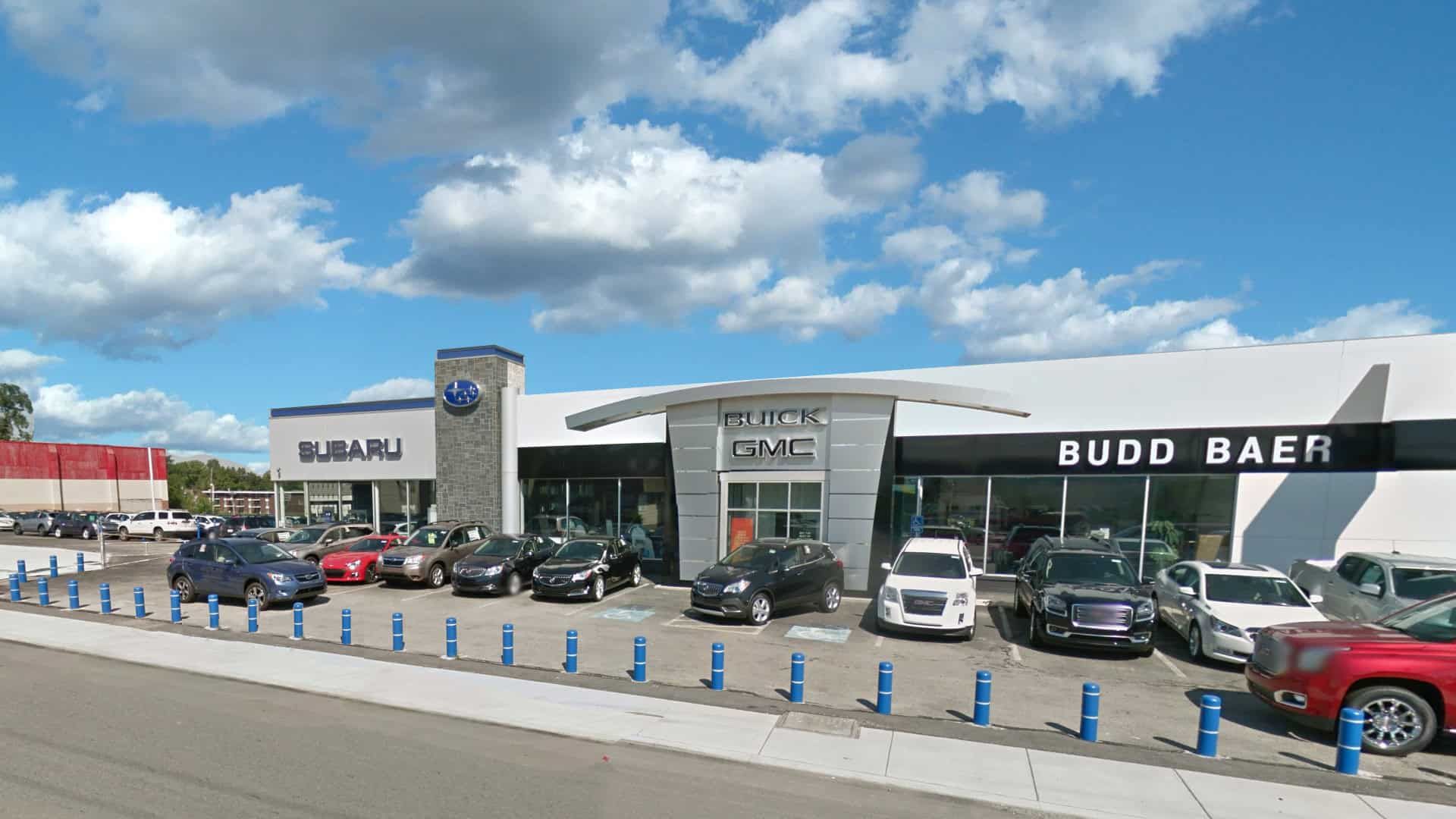
Budd Baer Inc. is a successful and rapidly expanding car dealership in the Washington, PA area. The company has 135 on-site and remote employees and operates several facilities across a five-acre campus. When a fire destroyed two-thirds of the site in 2003, the company saw an opportunity to install a more modern, centralized communications infrastructure using VoIP (voice over IP).
Budd Baer Inc. is a successful and rapidly expanding car dealership in the Washington, PA area. The company has 135 on-site and remote employees and operates several facilities across a five-acre campus. When a fire destroyed two-thirds of the site in 2003, the company saw an opportunity to install a more modern, centralized communications infrastructure using VoIP (voice over IP).
Business Challenges
Budd Baer Inc.’s original building dates back to the 1920s. Since then, 23 extensions have been added, according to Bryan Baer, general manager. “You can imagine how complicated the wiring, electrical work, and data cabling would have been by 2003, when the fire happened.” After the fire, Budd Baer hired an IT systems provider to reconfigure the entire dealership for VoIP and provide the equipment and phones. “They set everything up to have a VoIP system,” Baer explains. “But at that time, VoIP had only just become mainstream.” Baer admits that problems persisted—this time with voice quality and support. “That provider left us, and we couldn’t find anyone else capable of supporting our equipment and endpoints.”
Performance was also a problem. There was echo on our lines. Sometimes phone calls simply wouldn’t go through, even though we had many open lines for dialing; and incoming callers often got busy signals. We couldn’t get voicemail indicators. It was a whole bunch of things that wouldn’t have been a big problem for a two-person business. But with more than 100 employees handling 8 car sales and 120 to 150 repair orders a day, we are a very busy shop. Good communications systems are essential to our business.”
Sangoma Solutions
While looking for someone to support his hardware and software, Baer discovered Sangoma. “I wanted someone established, not a fly-by-night operation. I had a long conversation with the team, who connected to my phone server over the Internet to see what was needed.” The decision was made to install a new FreePBX server that supports the Asterisk PBX software, and to reset the old server and reinstall it as a backup machine. “This way, I didn’t lose my initial hardware investment,” says Baer. FreePBX is a web-based graphical interface and configuration file generator that makes it easier for Asterisk PBX users to write their own dial plans and configuration files. FreePBX includes several visual configuration tables and modules that provide extensive, feature-rich business communication capabilities, and can run in the cloud or on premises for maximum flexibility.
While looking for someone to support his hardware and software, Baer discovered Sangoma. “I wanted someone established, not a fly-by-night operation. I had a long conversation with the team, who connected to my phone server over the Internet to see what was needed.” The decision was made to install a new FreePBX server that supports the Asterisk PBX software, and to reset the old server and reinstall it as a backup machine. “This way, I didn’t lose my initial hardware investment,” says Baer. FreePBX is a web-based graphical interface and configuration file generator that makes it easier for Asterisk PBX users to write their own dial plans and configuration files. FreePBX includes several visual configuration tables and modules that provide extensive, feature-rich business communication capabilities, and can run in the cloud or on premises for maximum flexibility.
Results
After running FreePBX for a little over two years, Baer says the improvements have been significant. In fact, things were going so well that they decided to add further features, including integrating the phone system with billing software and setting up automated callback calls for appointments and parts ready for pickup. Between the time the dealership parted ways with its first provider and the installation of the new system, the customer no-show rate sometimes reached 30%, Baer explains. “The original provider handled outbound calls, but it wasn’t integrated with the phone system. Customers were simply given a phone number and extension to call. With the fully automated system we have now, no-show rates have fallen to their lowest ever, at 5%, because we can pull our own lists to initiate calls.”
After running FreePBX for a little over two years, Baer says the improvements have been significant. In fact, things were going so well that they decided to add further features, including integrating the phone system with billing software and setting up automated callback calls for appointments and parts ready for pickup. Between the time the dealership parted ways with its first provider and the installation of the new system, the customer no-show rate sometimes reached 30%, Baer explains. “The original provider handled outbound calls, but it wasn’t integrated with the phone system. Customers were simply given a phone number and extension to call. With the fully automated system we have now, no-show rates have fallen to their lowest ever, at 5%, because we can pull our own lists to initiate calls.”
Today, Baer estimates that the improved system initiates more than 100 automated notifications per day, whether to schedule appointments, send reservation reminders, or inform customers that a part has arrived. “Customers are happy because they can easily reschedule or connect with a person if needed, simply by pressing a button. This saves a lot of labor and ensures our schedule stays full.” He says the effort amounted to $6,000 in software costs. “But now our employees no longer spend half their day on the phone. Including labor and lost revenue, we recouped our costs in six months,” says Baer.
Baer is looking for more integration options for his FreePBX system as his needs evolve. A more recent addition in progress is integration with Carr Research’s customer relationship management software, which allows them to review customer records and provide customer service reports. “We’re starting with click-to-dial and an incoming-call history pool,” Baer explains. “This way, a service advisor can speak knowledgeably with the person without having to ask many questions, because they can instantly see their history.”
Baer’s next project with Sangoma is a fully integrated wireless DECT phone solution for the collision center. “Estimators spend a lot of time in lots and workshops assessing damage, so they move around a large area. With wireless phones, they can talk to one another anywhere across the five-acre campus without losing information about the customer or supplier they are speaking with.”