
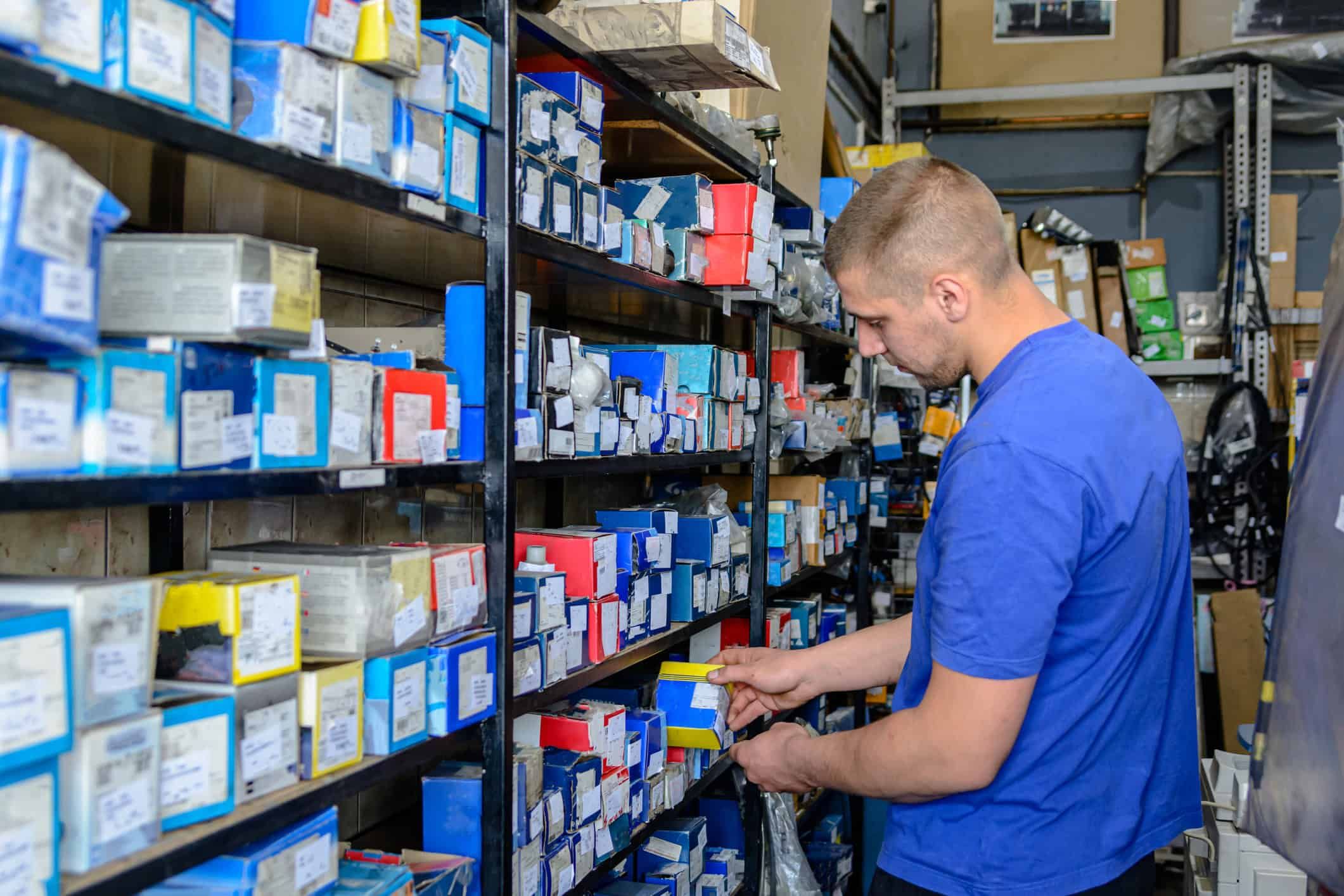
The Customer
The New York-based auto parts retailer, Parts Authority, currently operates more than 70 locations in Georgia, New Jersey, Maryland, DC, and Arizona, each with a customer support team that collectively handles thousands of incoming calls from across the nation. In 2011, the company began converting its conventional phone systems to VoIP.
The New York-based auto parts retailer, Parts Authority, currently operates more than 70 locations in Georgia, New Jersey, Maryland, DC, and Arizona, each with a customer support team that collectively handles thousands of incoming calls from across the nation. In 2011, the company began converting its conventional phone systems to VoIP.
Business Challenges
After more than 40 years in business, Parts Authority has grown significantly through organic expansion and acquisitions. With this success, its existing phone system became cumbersome and difficult to manage. Sixty‑eight percent of its 70 locations had individual Asterisk PBX systems – all managed by a relatively small support team. “We needed to consolidate our telecom spending and prepare for future expansion,” explains Robert Pesiri, CTO of Parts Authority. In 2011, the company decided to migrate to an Asterisk-based VoIP model. However, Pesiri says the initial steps in the transition to VoIP had limited success. “With IP, you can’t control QoS [quality of service] over public Internet circuits. We encountered many problems, including very poor call quality and dropped calls. Managing queues, extensions, and users across so many PBXs was very challenging.” In addition, no disaster recovery or failover automation solution was in place, which was crucial to the company’s communication needs. In 2015, Pesiri turned to Sangoma FreePBX to solve these problems. “When we started the conversation, the software we were using was a free version that involved a lot of complicated custom programming and limited configuration options for features built into Sangoma’s FreePBX,” says Pesiri. “Also, we didn’t want a PBX at every location; but we did want an on-premises solution. We realized that regionalizing our PBXs with one vendor for the software and hardware made much more sense.”
Sangoma Solutions
During his research, Pesiri discovered that Sangoma could be a single vendor for both SBCs (session border controllers) and software (FreePBX). “I liked that,” says Pesiri. “I also appreciated that I didn’t need a hosted system, since we wanted to retain control over our SBCs, PBXs, and inbound trunks.” One FreePBX feature the team appreciates is the factory default setting for phones. “When you start up a phone, you just enter the extension number and it registers automatically,” explains Pesiri. “Since we constantly add or move phones, this makes configurations and updates much simpler. Everything is literally ready to go and easy to support.” Pesiri also appreciates the direct-dial reports he receives from FreePBX. “That’s something we couldn’t get before. It really helps us.” FreePBX enabled Parts Authority to establish regional PBXs, reducing them from 50 main PBXs to three. Today, all locations are on a fully meshed MPLS (multiprotocol label switching) network with SIP trunks to four locations. “For example, one SIP trunk goes to Georgia, another to DC, and another to New York,” explains Pesiri. “So we have three main PBXs with three main SBCs and three Verizon SIP trunks. A fourth SIP trunk and SBC host three additional backup PBXs in the Bronx for high availability and disaster recovery.” By moving from 50 PBXs to one per region, “all queues are built on the region’s main and backup PBXs, so the phones at each location in a region connect to their queues, and the phones register with both PBXs,” he explains. “Each phone has two extensions, a four-digit one that registers with the main PBX, and a five-digit one that registers with the backup PBX.” Here is a low-level explanation of how it works: an incoming call is sent over a SIP trunk through the Sangoma SBC to the region’s main PBX. If the SIP trunk or SBC is down for any reason, the network sends the call over a backup SIP trunk and SBC to the main PBX and rings the users’ four-digit extensions. If, for any reason, the main PBX is down, all incoming calls are sent to the backup PBX and ring all five-digit extensions. The phone does not need to fail over and register with another PBX. In addition to this design, there are many other benefits, such as reporting and maintenance.
During his research, Pesiri discovered that Sangoma could be a single vendor for both SBCs (session border controllers) and software (FreePBX). “I liked that,” says Pesiri. “I also appreciated that I didn’t need a hosted system, since we wanted to retain control over our SBCs, PBXs, and inbound trunks.” One FreePBX feature the team appreciates is the factory default setting for phones. “When you start up a phone, you just enter the extension number and it registers automatically,” explains Pesiri. “Since we constantly add or move phones, this makes configurations and updates much simpler. Everything is literally ready to go and easy to support.” Pesiri also appreciates the direct-dial reports he receives from FreePBX. “That’s something we couldn’t get before. It really helps us.” FreePBX enabled Parts Authority to establish regional PBXs, reducing them from 50 main PBXs to three. Today, all locations are on a fully meshed MPLS (multiprotocol label switching) network with SIP trunks to four locations. “For example, one SIP trunk goes to Georgia, another to DC, and another to New York,” explains Pesiri. “So we have three main PBXs with three main SBCs and three Verizon SIP trunks. A fourth SIP trunk and SBC host three additional backup PBXs in the Bronx for high availability and disaster recovery.” By moving from 50 PBXs to one per region, “all queues are built on the region’s main and backup PBXs, so the phones at each location in a region connect to their queues, and the phones register with both PBXs,” he explains. “Each phone has two extensions, a four-digit one that registers with the main PBX, and a five-digit one that registers with the backup PBX.” Here is a low-level explanation of how it works: an incoming call is sent over a SIP trunk through the Sangoma SBC to the region’s main PBX. If the SIP trunk or SBC is down for any reason, the network sends the call over a backup SIP trunk and SBC to the main PBX and rings the users’ four-digit extensions. If, for any reason, the main PBX is down, all incoming calls are sent to the backup PBX and ring all five-digit extensions. The phone does not need to fail over and register with another PBX. In addition to this design, there are many other benefits, such as reporting and maintenance.
The Results
“Because our phones are registered to a primary PBX and a backup PBX, they will be routed to whichever PBX is most available,” says Pesiri. “Traditionally, a phone had to register to the backup PBX, which could take a minute or more, even if there was a brief network issue. Now I don’t have to worry because the phones are registered to both PBXs at the same time. The model works perfectly, and we never miss an incoming call.” Parts Authority now has complete failover. The company has also reduced its dependence on multiple providers to two carriers. “If Verizon were to go down, MPLS calls can automatically be transferred to our backup VOIP provider over the public Internet. So we have redundancy from Point A to Point Z,” explains Pesiri. Before switching to FreePBX and Verizon SIP trunks, dropped/missed call rates due to various PBX and circuit issues ranged from three to five%. “Now we are below one percent. And support and maintenance have dropped dramatically because there are fewer boxes to monitor. With FreePBX, we can support our devices, update the software, and manage holiday scheduling for each region. It used to take four people to manage our phone systems. Now we can do it with one. ” He notes that his team has only scratched the surface of FreePBX’s features and capabilities and Sangoma equipment: “We look forward to spending time learning more and presenting the features to our users. What we do know is how easy it has been to grow and expand with this system.”